Why Generational Storytelling Is the Most Important Thing Your Family Isn't Doing
Estimated read time: 6 minutes
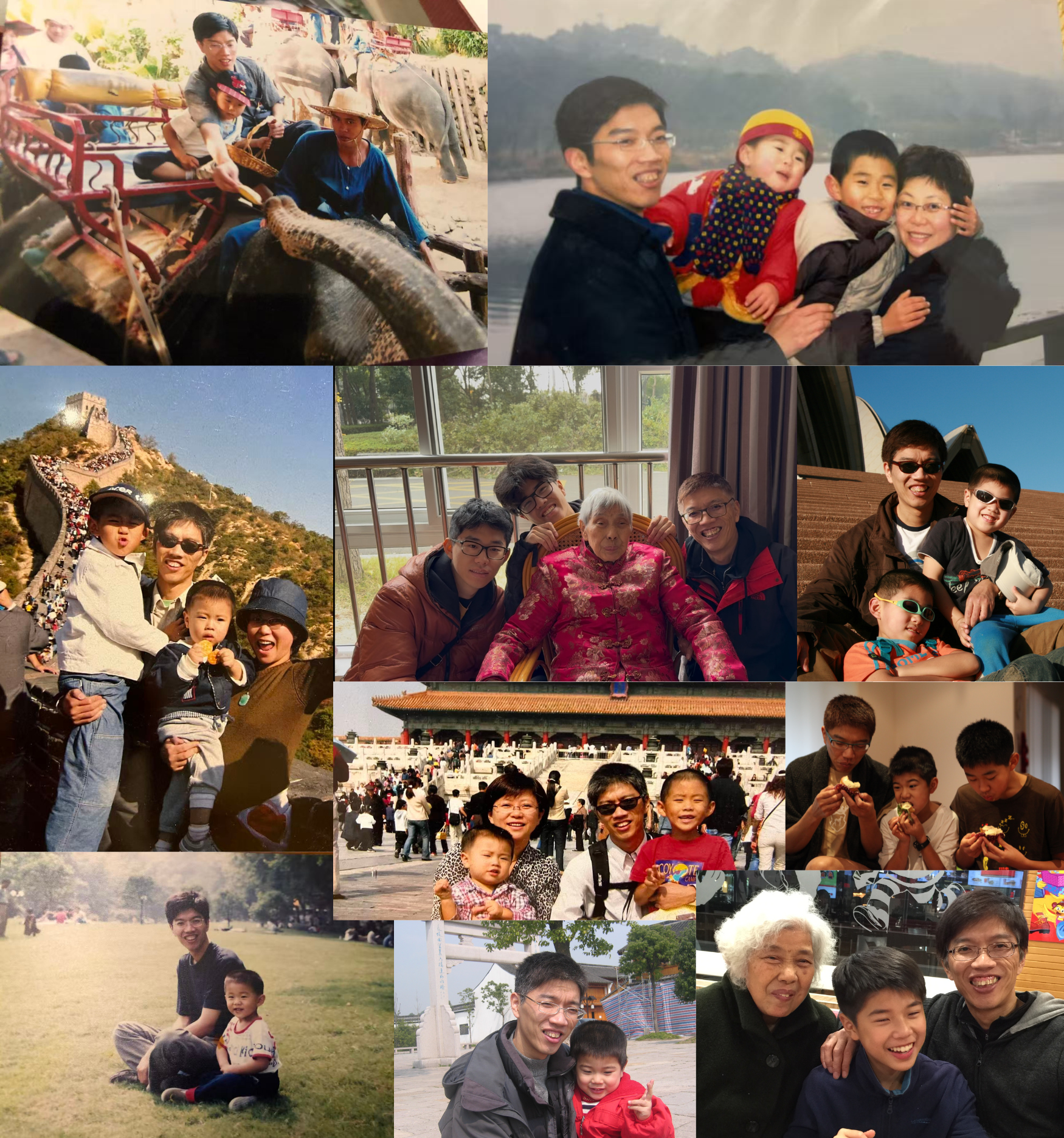
Every family has stories that never get told twice. A grandmother's memory of the neighborhood she grew up in. A father's first day at a job that changed his life. A moment that shaped who someone became, locked away in a mind that won't hold it forever.
Generational storytelling is the practice of capturing, preserving, and passing down those stories across family lines. It sounds simple. It is almost universally neglected.
This article covers why it matters, what gets lost when families skip it, and how a family storytelling app can make the practice sustainable for real people with real schedules.
What Is Generational Storytelling?
Generational storytelling is more than sharing old photos or retelling holiday memories. It is the intentional act of recording the lived experiences, values, and voices of every generation in a family so that future generations can know who they came from.
It covers:
- Personal histories (childhood, immigration, education, work)
- Beliefs, values, and the reasoning behind them
- Family traditions and where they originated
- Formative moments: grief, joy, failure, reinvention
- The texture of daily life that photographs never capture
The goal is not a polished documentary. The goal is preservation. A recording of a voice. A few paragraphs answering a specific question. A photo with actual context written beneath it.
What Gets Lost Without It
Researchers estimate that within three generations, most family stories are completely gone. The people who lived them pass away. The people who heard them firsthand get old. Their children inherit fragments, names without faces, dates without meaning.
What disappears is not just facts. What disappears is identity.
Studies in family psychology consistently show that children and young adults with a strong sense of family narrative, knowing where they come from and what their family has overcome, have higher resilience, stronger self-esteem, and better tools for handling adversity. The stories are not nostalgia. They are infrastructure.
When families skip generational storytelling, they are not saving time. They are spending it. The cost comes later, in questions that can never be answered and connections that can never be made.
Why Families Struggle to Do It
The intent is almost always there. Most people, when asked, say they want to record their parents or grandparents. They want to capture those stories before it is too late.
The follow-through is almost always missing. Here is why:
It feels like a project. Sitting someone down with a camera or a notebook signals formality. It creates pressure. Suddenly the storyteller feels like they are being interviewed, and the naturalness disappears.
There is no structure. "Tell me about your life" is a paralyzing prompt. People do not know where to start, so they do not start.
There is no consistent nudge. Good intentions get buried under the week. Without a recurring trigger, the project stays permanently in the "someday" column.
Technology feels like a barrier. Older generations especially are reluctant to use tools that feel complicated or unfamiliar.
A good family storytelling app solves all four of these problems directly.
How a Family Storytelling App Changes the Practice
The best family storytelling apps are not digital scrapbooks. They are systems designed to make generational storytelling the path of least resistance.
The right app does a few specific things well:
Provides guided prompts on a schedule. Instead of "tell me about your life," a prompt might be: "What is one thing you wish you had told your parents before they passed?" Or: "Describe the home you grew up in. What did it smell like?" Specificity unlocks memory. A weekly prompt lands gently, without pressure, and makes it easy to respond in a few minutes.
Captures voice, not just text. Text is useful. Voice is irreplaceable. Hearing how a person laughs while telling a story, the cadence of their speech, the pauses, is something no typed transcription can replicate. A family storytelling app that captures voice recordings preserves something fundamentally different from a written archive.
Keeps everything in one private place. The story about your grandfather's first job and the photo from the summer of 1968 should live together, accessible to every family member who wants them, protected from the scatter of group chats and shared drives.
Works across generations. An 80-year-old and a 30-year-old need to be able to use the same tool. That means minimal friction, a clean interface, and no assumption of technical fluency.
Starting Generational Storytelling in Your Own Family
You do not need a dedicated weekend or a family reunion. You need a starting point.
Here are three low-friction ways to begin:
1. Pick one person and one question. Do not try to capture everything. Start with the oldest living member of your family and ask a single, specific question. Record their answer. That is a complete first step.
2. Use prompts to create a rhythm. The hardest part of any habit is the cue. A weekly prompt from a family storytelling app removes the decision fatigue. Someone asks. You answer. The archive grows without anyone managing it manually.
3. Involve the whole family. Generational storytelling is not just about capturing elders. Younger family members have stories too. Cousins, parents, siblings: every voice adds a layer. The richest family archives are the ones where multiple generations contributed.
The Stories Will Not Wait
There is a version of this article that ends with a soft encouragement. This is not that version.
The people in your family with stories worth preserving are aging. The details that make those stories vivid, the names, the places, the feelings, fade first. Then the people themselves are gone, and no amount of wanting will bring the stories back.
Generational storytelling is not a project for someday. It is a practice for now, built one prompt and one voice recording at a time.
Tell Me Your Story’s a family storytelling app built to make this practice simple. Weekly guided prompts. Voice and photo capture. A private family library where every answer is preserved and shared with the people who matter most.
The stories are there. The only question is whether you capture them.
Published by Tell Me Your Story. Start preserving your family's legacy at [tellmeyourstory.app](https://tellmeyourstory.app/).
