How to collect childhood stories to preserve memories
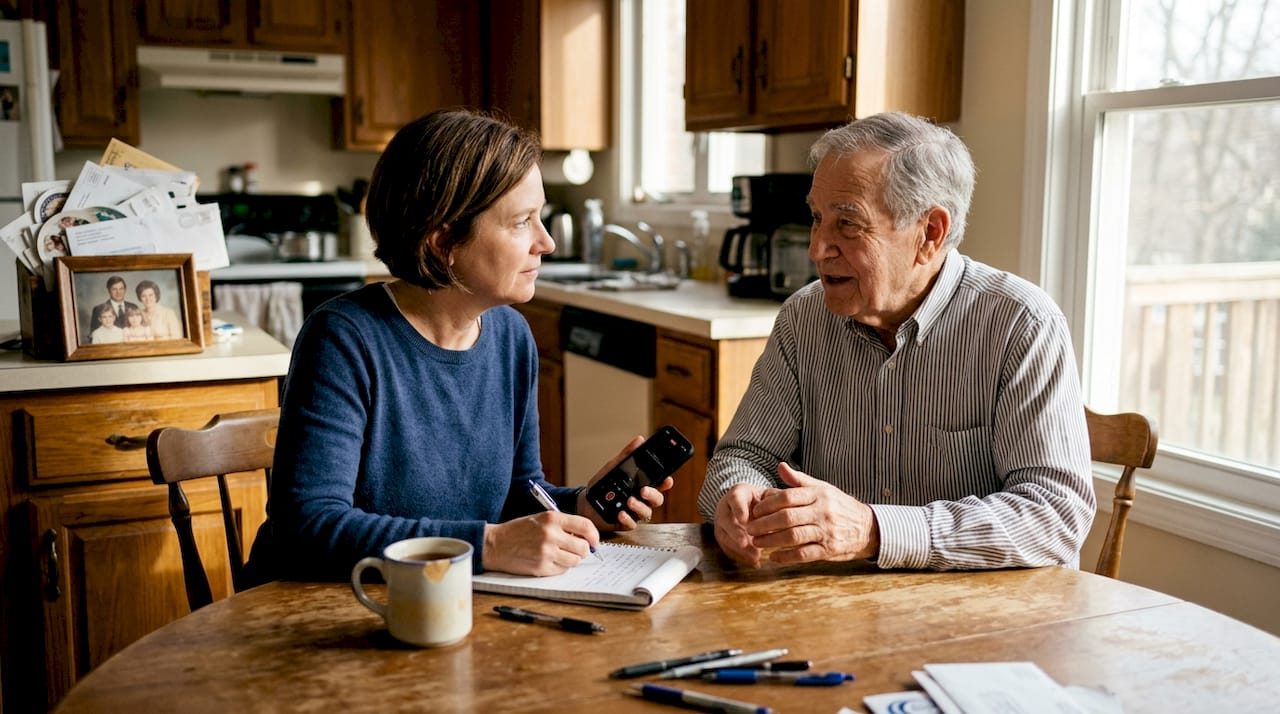
Every family holds a treasury of childhood stories, yet many of these precious memories fade or disappear entirely when loved ones pass. Without intentional effort, the laughter, lessons, and legacy that shaped your family can vanish in a single generation. Collecting and preserving childhood stories strengthens family bonds, honors your heritage, and creates a lasting gift for future generations. This guide walks you through practical steps and expert techniques to gather, record, and safeguard the memories that matter most, ensuring your family's unique history lives on.
Table of Contents
- Key takeaways
- Preparing to collect childhood stories
- How to collect stories effectively with open-ended questions
- Preserving and storing collected childhood stories
- Creative methods to enhance and share childhood stories
- Preserve your family stories with Tell Me Your Story app
- Frequently asked questions
Key Takeaways
| Point | Details |
|---|---|
| Open ended questions | Open ended questions invite detailed memories and richer storytelling from elders. |
| Begin with elders | Prioritize elders such as grandparents to build rapport and guide the conversation. |
| Preserve recordings safely | Use backups and reliable formats and test equipment before sessions to safeguard memories. |
| Consent and privacy | Explain use of recordings, who will access them, and allow storytellers to review and opt out of sharing. |
Preparing to collect childhood stories
Successful story collection begins long before you press record. Thoughtful preparation sets the stage for meaningful conversations and ensures you capture memories ethically and effectively. Your first step is identifying the right storytellers, typically family elders who lived through the experiences you want to preserve. Grandparents, great-aunts, elderly neighbors, and longtime family friends hold irreplaceable knowledge about your family's past. Reach out early, as health and memory can change quickly.
Gather your recording tools before scheduling conversations. A smartphone with a voice recorder app works perfectly for most situations, but dedicated audio recorders offer superior sound quality. Bring backup batteries, extra storage, and a notebook for jotting down follow-up questions or details that emerge during conversation. Test your equipment beforehand to avoid technical failures during precious storytelling moments.
Prepare open-ended questions that encourage detailed responses rather than simple yes or no answers. Questions like "What was your favorite childhood adventure?" or "Tell me about your first day of school" invite rich narratives. The Smithsonian Folklife and oral history interviewing guide recommends starting with family elders, building rapport naturally, and using either life history or focused interview approaches depending on your goals. Browse oral history questions to spark ideas for your own list.
Understanding consent and privacy forms the ethical foundation of story collection. Always explain how you plan to use recordings, who will have access, and where files will be stored. Give storytellers the right to review recordings before you share them and the option to keep certain stories private. This respect builds trust and often leads to more candid, meaningful sharing.
Create a relaxed environment that encourages natural conversation. Choose a quiet location free from distractions, offer comfortable seating, and schedule sessions when your storyteller feels alert and energized. Morning often works best for older adults. Bring photographs, heirlooms, or objects connected to childhood memories as conversation starters.
Pro Tip: Schedule multiple short sessions rather than one marathon interview. Fatigue diminishes detail and enthusiasm, while returning for follow-up conversations allows storytellers to remember additional details between sessions.
Key preparation steps include:
- Identify family elders and key storytellers early
- Test recording equipment and prepare backups
- Draft open-ended questions tailored to your family
- Discuss consent, privacy, and intended use clearly
- Choose comfortable, quiet settings for recording
- Gather photographs and objects as memory prompts
Learn more about the importance of family storytelling through our story and why preserving these connections matters for every generation.
How to collect stories effectively with open-ended questions
The quality of your questions directly determines the richness of the stories you collect. Open-ended questions elicit detailed stories by inviting storytellers to share experiences rather than facts. Instead of asking "Did you like school?" try "Tell me about your favorite teacher and what made them special." The first question yields a one-word answer; the second opens a door to memories, emotions, and context.
Begin conversations with broad invitations that give storytellers freedom to choose where to start. Phrases like "Tell me about your childhood home" or "What's your earliest memory?" allow natural entry points into storytelling. As the conversation unfolds, use follow-up questions to explore interesting details: "What did that feel like?" or "What happened next?" These gentle prompts encourage deeper reflection without forcing a rigid structure.
Photographs and objects serve as powerful memory triggers. Bring old family photos, report cards, toys, or clothing items from childhood and ask storytellers to describe what they see and remember. A faded photograph of a childhood birthday party might unlock stories about family traditions, neighborhood friends, or economic circumstances that shaped daily life. Physical objects create sensory connections that pure conversation sometimes misses.
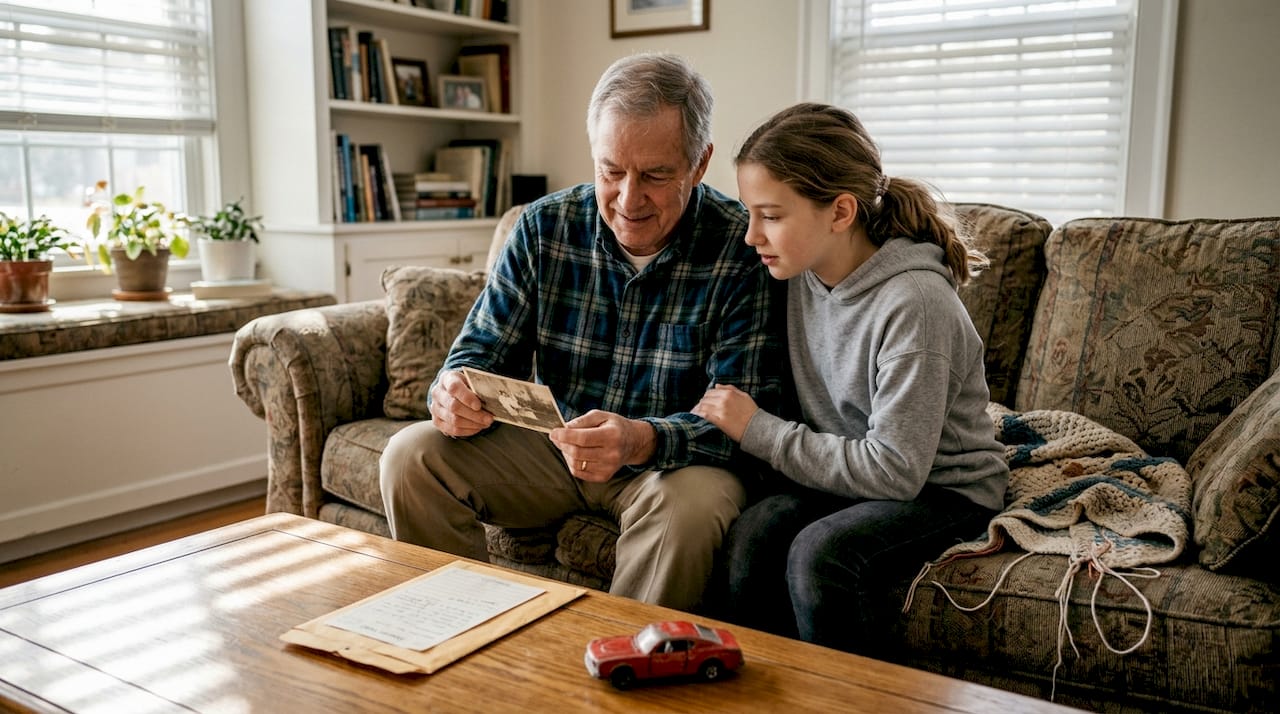
Allow pauses and silence during conversations. When a storyteller stops talking, resist the urge to immediately fill the gap with another question. Silence gives people time to search their memories and often leads to the most valuable stories. Count slowly to ten before speaking, and you'll be surprised how often your storyteller continues with a deeper memory or emotional reflection.
Avoid yes/no questions throughout your conversation. Questions beginning with "Did you," "Were you," or "Was it" typically generate short, factual responses. Transform these into open invitations: change "Did you have chores?" to "Describe your daily chores and how you felt about them." This small shift produces stories instead of data points.
Maintain an encouraging, nonjudgmental tone regardless of what stories emerge. Your role is to listen and preserve, not to correct, criticize, or impose modern values on past experiences. When storytellers sense acceptance, they share more honestly and completely. Simple affirmations like "That's fascinating" or "Tell me more about that" signal your genuine interest.
Pro Tip: Keep your prepared questions visible but don't follow them rigidly. Let the conversation flow naturally, using your list only to redirect if the storyteller loses focus or to introduce new topics when one area feels complete.
Follow this sequence for effective story collection:
- Start with a warm-up question about a happy memory
- Use photographs or objects to trigger specific recollections
- Ask open-ended follow-ups to explore interesting details
- Allow comfortable silences for reflection
- Gently redirect if conversation strays too far off topic
- End by asking if there's anything else they'd like to share
Explore more open-ended questions examples to build your personalized interview guide and ensure you capture the full depth of your family's experiences.
Preserving and storing collected childhood stories
Collecting stories represents only half the preservation challenge. Without proper storage and backup, your precious recordings remain vulnerable to loss through device failure, file corruption, or accidental deletion. Digital preservation requires intentional strategy and consistent execution to ensure memories survive for generations.
Choose reliable digital formats for your recordings. MP3 and WAV files work well for audio, while MP4 provides excellent quality for video recordings. These common formats remain widely supported and easily accessible across devices and platforms. Avoid proprietary formats that might become obsolete as technology evolves.
Implement the 3-2-1 backup rule immediately after each recording session. Create three total copies of every file, store them on two different types of media like an external hard drive and cloud storage, and keep one copy offsite in case of fire, flood, or theft. This redundancy protects against the most common causes of data loss. Cloud services like Google Drive, Dropbox, or iCloud offer convenient offsite backup, while external hard drives provide local control.
Transcribe your recordings to create searchable text versions of stories. Transcription makes specific memories easy to find without listening to hours of audio. You can transcribe manually, use automated transcription services, or hire professional transcriptionists. Include transcripts alongside audio files in your backup system. Written versions also serve families who prefer reading to listening.
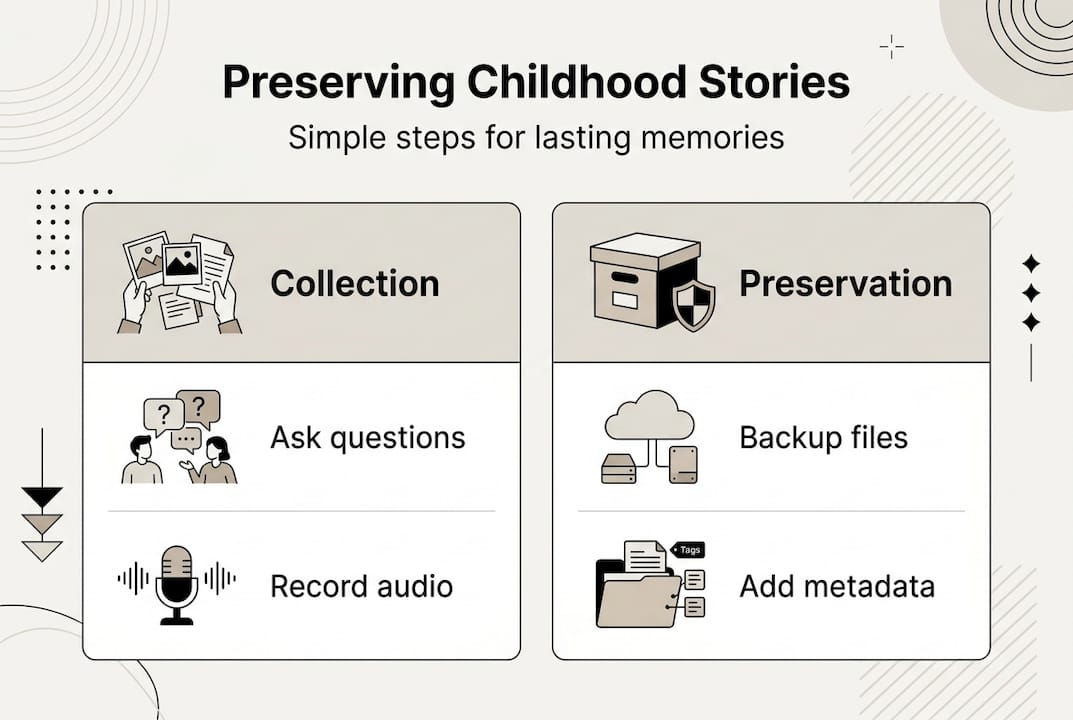
Add metadata to every file before storing it. Metadata includes the storyteller's name, recording date, location, topics covered, and any relevant context. This information prevents future confusion about who's speaking or when events occurred. Most devices allow you to edit file properties to include this critical information. Create a simple spreadsheet tracking all recordings with corresponding metadata for easy reference.
Understand the trade-offs between digital and physical preservation methods:
| Storage method | Advantages | Disadvantages |
|---|---|---|
| Digital files | Easy to duplicate, share, and search; no physical space required | Requires active management and regular migration to new formats |
| Physical media (CDs, DVDs) | Tangible, doesn't require electricity or internet | Degrades over time; easily damaged; becoming obsolete |
| Cloud storage | Accessible anywhere; automatic backups; professional maintenance | Requires ongoing subscription; privacy concerns; dependent on internet |
| External hard drives | Large capacity; one-time cost; full control | Can fail without warning; requires manual backup discipline |
Pro Tip: Set an annual calendar reminder to verify all backups are working and accessible. Technology changes quickly, and files stored five years ago might need migration to current formats or platforms.
The Tell Me Your Story app handles preservation automatically, applying professional backup strategies while keeping your family's stories secure and accessible only to designated family members. This removes the technical burden while ensuring memories remain protected.
Creative methods to enhance and share childhood stories
Preservation extends beyond recording and storage. Creative methods like memory boxes and family cookbooks add multi-sensory dimensions to storytelling and deepen family engagement with shared history. These approaches transform passive archives into living, interactive experiences that strengthen bonds across generations.
Memory boxes create tangible connections to childhood stories. Gather photographs, letters, report cards, small toys, clothing items, or any objects connected to the stories you've collected. Place them in a decorated box with labels explaining their significance and linking them to specific recordings or transcripts. Children and grandchildren can touch, examine, and ask questions about these artifacts, making abstract stories feel real and immediate.
Family cookbooks combine recipes with the stories behind them. As you collect childhood memories, ask about favorite meals, holiday traditions, and the people who prepared them. Compile these recipes alongside stories about Sunday dinners, holiday gatherings, or everyday meals that shaped family culture. This approach prioritizes informal oral histories for bonding while creating a functional keepsake families use regularly.
Host storytelling gatherings where family members share memories together. These events work especially well during holidays or reunions when multiple generations gather. Play selected recordings, invite live storytelling, and encourage younger family members to ask questions. Recording these sessions captures new stories and preserves the interactions between generations, adding layers to your family archive.
Digital slideshows and photo books offer modern presentation formats for collected stories. Pair audio clips with relevant photographs, creating multimedia presentations you can share via email or social media. Photo book services let you print professional-quality books combining images, story excerpts, and family tree information. These make meaningful gifts for milestone birthdays, anniversaries, or holidays.
Respect ethical boundaries when sharing stories within your family. Not every story belongs in every setting, and some memories should remain private even within families. Before sharing:
- Confirm the storyteller approved this specific use
- Consider whether younger family members are ready for certain content
- Respect requests to keep particular stories confidential
- Allow family members to opt out of recordings or sharing
Creative preservation methods to explore:
- Memory boxes with labeled artifacts and photographs
- Family cookbooks pairing recipes with food memories
- Annual storytelling gatherings with multiple generations
- Digital slideshows combining audio and images
- Professional photo books as milestone gifts
- Private family websites or apps for secure sharing
Consider family memory gifts that help relatives participate in preservation efforts, turning story collection into a shared family project that everyone values and contributes to over time.
Preserve your family stories with Tell Me Your Story app
Collecting childhood stories requires dedication, but the right tools make preservation simple and sustainable. The Tell Me Your Story app streamlines every step, from recording initial conversations to organizing and sharing memories securely within your family. The platform offers engaging prompts specifically designed to unlock detailed childhood memories, making it easy for any family member to contribute stories without technical expertise.
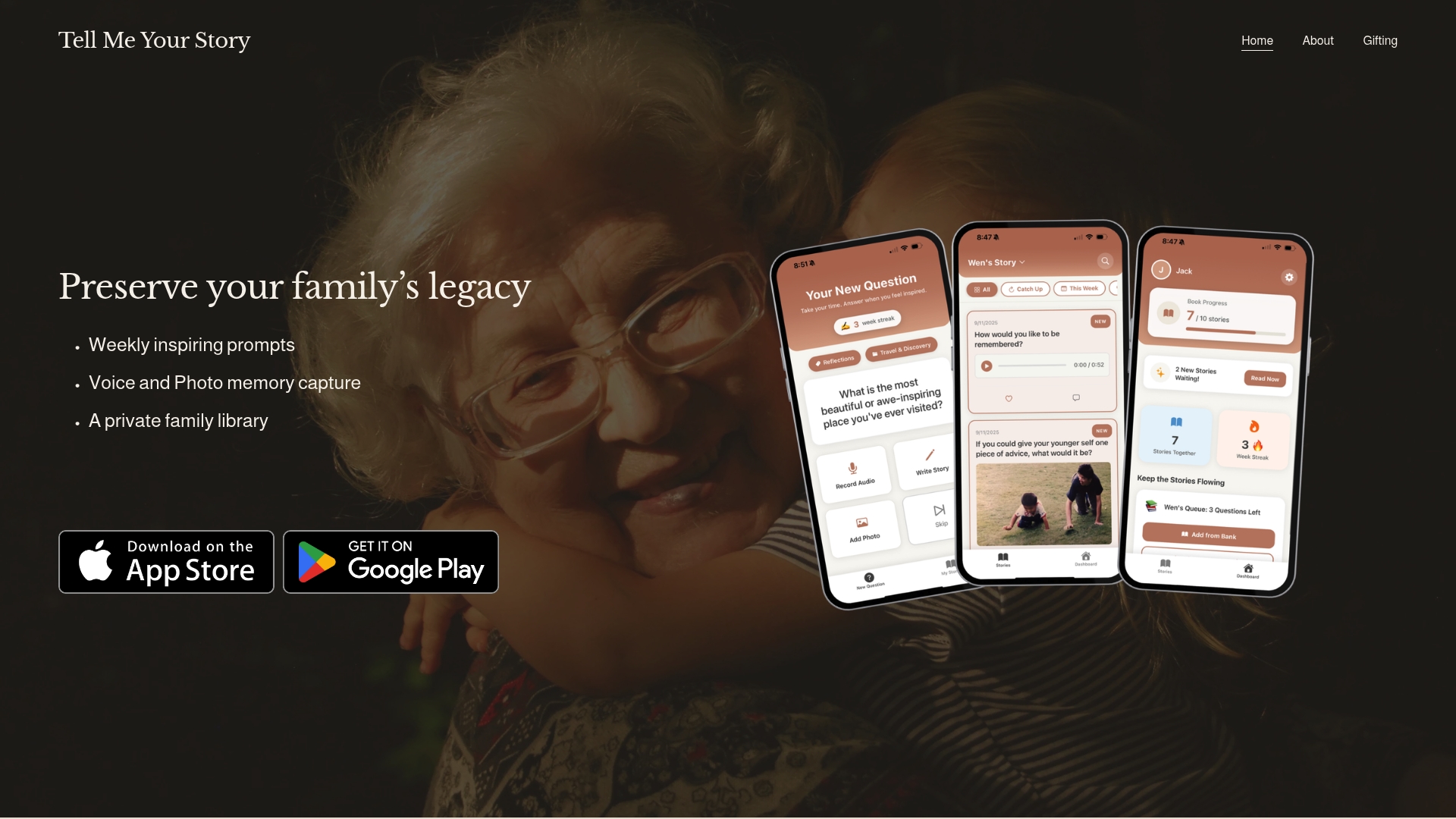
The app creates a private, multimedia family library accessible only to designated members, ensuring your stories remain protected while staying easily available to those who matter most. Voice and photo capture features let you preserve memories in multiple formats, building a rich archive that future generations will treasure. Whether you're starting your family history project or expanding an existing collection, Tell Me Your Story provides the structure and security your memories deserve. Explore the platform through a preview or discover why it makes the ultimate family gift for parents, grandparents, and anyone who values preserving their legacy.
Frequently asked questions
What are the best open-ended questions to ask when collecting childhood stories?
Use prompts like "Tell me about a time when you felt really proud" or "What was your favorite childhood memory and why?" to elicit detailed, emotional stories. Questions beginning with "Describe," "Tell me about," or "What was it like" encourage storytelling rather than simple facts. Avoid yes/no questions entirely, as they shut down conversation and produce shallow responses. Browse this oral history question list for dozens of proven prompts.
How do I ensure the ethical sharing of personal family stories?
Always obtain clear consent before recording or sharing any story, explaining exactly how you plan to use the recording and who will have access. Respect privacy by allowing storytellers to review recordings before you share them and honoring requests to keep certain stories confidential. Give family members the right to withdraw consent at any time, and be especially careful with sensitive content involving living people. Learn more about story ethics and privacy to protect your family while preserving important memories.
What is the best way to preserve digital recordings long-term?
Make multiple backups using the 3-2-1 rule: three total copies on two different storage types with one copy stored offsite. Use common file formats like MP3, WAV, or MP4 that remain widely supported, and add metadata including names, dates, and topics to every file. Set annual reminders to verify backups work and migrate files to current formats as technology evolves. Cloud storage combined with external hard drives provides excellent redundancy.
How long should each story collection session last?
Plan for 30 to 60 minutes per session, stopping sooner if your storyteller shows fatigue. Older adults often have limited energy, and attention spans naturally decrease over longer periods. Schedule multiple shorter sessions rather than trying to capture everything at once, as this approach produces better quality stories and allows storytellers to remember additional details between conversations. Always prioritize your storyteller's comfort over completing your question list.
Can I collect childhood stories remotely if family members live far away?
Video calling platforms like Zoom, FaceTime, or Skype work well for remote story collection, though audio quality may not match in-person recordings. Use recording software to capture the conversation, and send your storyteller a separate audio recorder if possible for backup audio. Mail photographs or objects in advance to use as conversation prompts during your call. Remote collection requires extra technical preparation but successfully preserves memories when distance prevents in-person visits.
Recommended
- Tell Me Your Story App | Record Family Histories & Parents' Stories
- Tell Me Your Story: The Ultimate Gift for Parents | Preserve Family Memories — Tell Me Your Story
- 50 Best Questions to Ask Your Parents (Oral History Guide) — Tell Me Your Story
- Why I Created the Tell Me Your Story App (Founder's Story) — Tell Me Your Story
