Why your kids need to hear grandma’s stories (according to science)

You might be surprised to learn that sharing family stories does more than preserve memories. Research shows that children who hear ancestor stories develop stronger self-esteem, lower anxiety levels, and greater resilience when facing challenges. These narratives create a psychological foundation that helps young people understand their place in the world and navigate difficult moments with confidence. This guide explores why preserving your family's stories matters and how you can capture these invaluable narratives using practical methods that honor both emotional impact and cultural sensitivity.
Table of Contents
Key takeaways
Understanding the emotional and developmental impact of ancestor stories
Practical methods to preserve family stories and heirlooms
Cultural sensitivity and ethical considerations in preserving ancestor stories
How to apply ancestor story preservation to strengthen family bonds and legacy
Preserve your family's stories with the Tell Me Your Story app
Frequently asked questions
Key Takeaways
Self esteem and resilience: Exposure to ancestor stories measurably boosts children's self esteem, lowers anxiety, and builds resilience to face challenges.
Emotional health foundation: Storytelling links individual well being with family heritage, creating a psychological foundation for emotional regulation and identity formation.
Practical daily benefits: Regular storytelling leads to stronger stress management, better problem solving, and improved coping in real life.
Cultural identity and belonging: Regular exposure to family narratives strengthens cultural identity and a sense of belonging within the family system.
Start with simple routines: Begin by weaving stories into meals or car rides using guided questions and easy prompts to capture meaningful memories.
Understanding the emotional and developmental impact of ancestor stories
Family narratives do far more than entertain around the dinner table. Empirical studies demonstrate that children exposed to ancestor stories show measurably higher self-esteem, reduced anxiety symptoms, and enhanced capacity to bounce back from setbacks. This isn't just sentimental value. The psychological mechanisms at work connect individual identity formation with broader family narratives, creating a developmental scaffold that supports emotional health throughout childhood and beyond.
Robyn Fivush's research reveals that storytelling functions as a developmental process linking personal well-being with family heritage. When children hear how their grandmother overcame hardship during the Great Depression or how their uncle started a business from scratch, they internalize a narrative of resilience and capability. These stories become mental resources they can draw upon when facing their own challenges. The effect compounds over time as children weave family narratives into their own sense of self.
Consider the practical implications for your family. A child struggling with academic pressure gains perspective when hearing how their parent navigated similar challenges. A teenager facing social rejection finds comfort in knowing their ancestors persevered through far greater obstacles. These connections aren't abstract. They manifest in concrete behavioral outcomes, from better stress management to stronger problem-solving skills.
"Family storytelling creates a bridge between individual experience and collective heritage, giving children a psychological foundation that supports emotional regulation and identity formation throughout their development."
The benefits extend beyond crisis management. Regular exposure to family stories helps children develop:
Enhanced narrative skills that improve communication and emotional expression
Stronger sense of cultural identity and belonging within their family system
Greater empathy through understanding different perspectives across generations
Improved ability to contextualize their own experiences within a larger story
You can start capturing these benefits today by incorporating storytelling into family routines. Simple conversations during meals or car rides create opportunities for older generations to share memories. Guided questions help structure these conversations and ensure you capture meaningful details. For families seeking structured approaches, memory preservation tools designed specifically for storytelling offer prompts and recording features that make the process natural and engaging.
Practical methods to preserve family stories and heirlooms
Preserving ancestor stories requires intentional effort and the right tools. The most effective approach combines multiple methods to create a comprehensive archive that serves different family members' needs and preferences. Start by identifying which stories matter most and which family members hold the most knowledge about specific periods or events.
Oral history interviews form the foundation of most preservation efforts. Schedule dedicated time with older relatives, prepare questions in advance, and create a comfortable environment that encourages open sharing. Record these conversations using your smartphone or dedicated audio equipment. The goal isn't perfection but authenticity. Background noise and occasional tangents add character and context that polished productions lack.
Digital tools have revolutionized family history preservation. Modern apps like the Tell Me Your Story platform combine voice recording with photo integration, creating multimedia narratives that engage multiple senses. These platforms offer structured prompts that guide conversations while allowing natural storytelling to emerge. The result is a rich archive that future generations can access easily.

Physical artifacts require different preservation strategies. Create photo albums that organize images chronologically or thematically, adding captions that provide context and identify people and places. Scan fragile photographs and documents to create digital backups that protect against physical deterioration. Store originals in acid-free materials away from direct sunlight and humidity.
Consider these specialized preservation methods:
Compile family recipes into a cookbook that captures culinary traditions and the stories behind signature dishes
Create an heirloom catalog documenting valuable items with photographs, provenance details, and family significance
Host family storytelling workshops where multiple generations gather specifically to share and record memories
Use prompted journals that guide family members through structured reflection on specific life periods or events
Organize regular recording sessions using interview question frameworks designed for oral history
Pro Tip: Set a quarterly reminder to update your digital backups and verify file integrity. Cloud storage services offer redundancy, but maintaining local copies on external drives provides additional security against data loss.
Different preservation methods suit different types of content and family preferences:
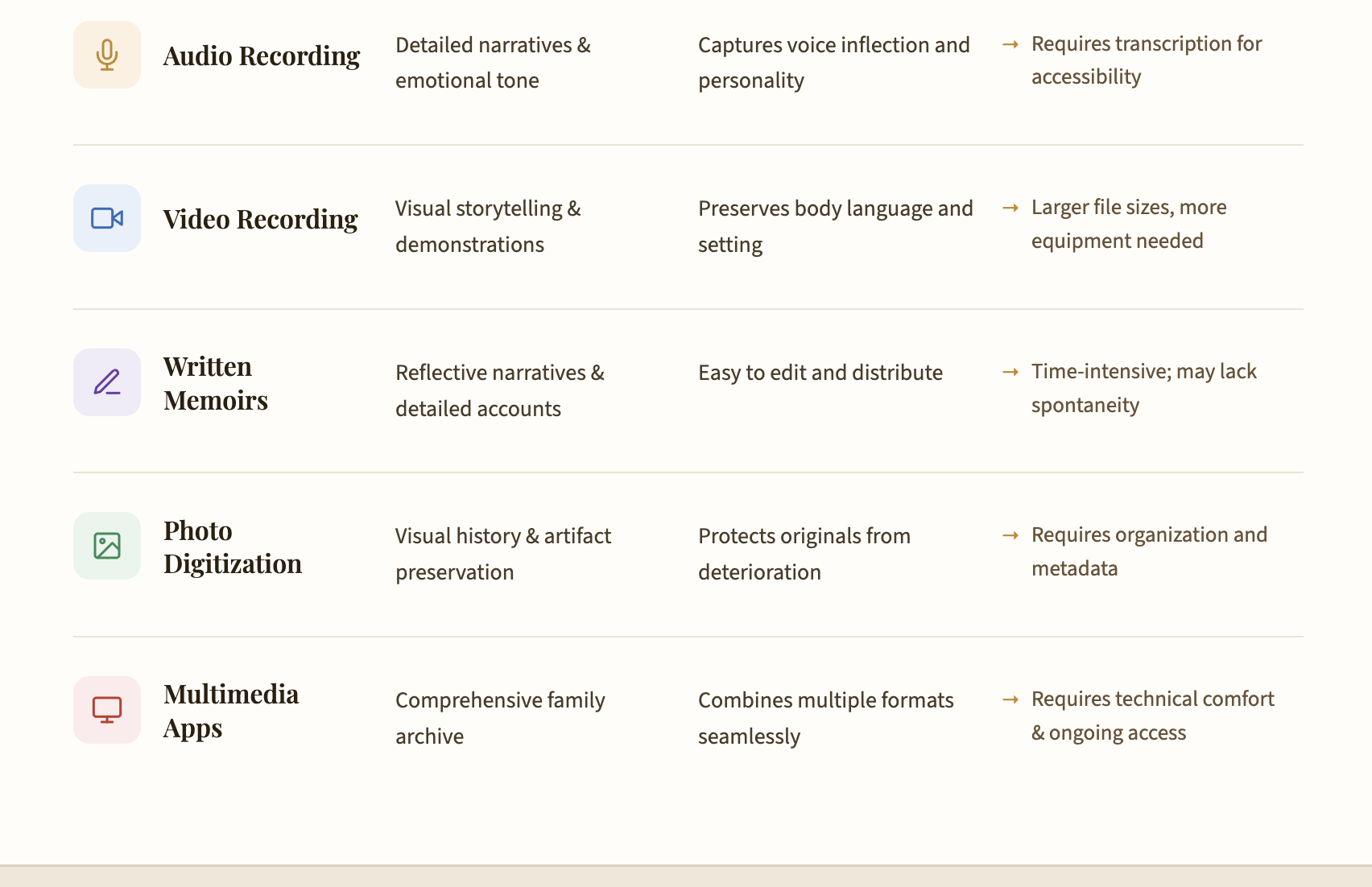
The key to successful preservation lies in consistency. Regular storytelling sessions, even brief ones, build momentum and normalize the practice within your family culture. Start small with one method and expand as you gain confidence and see results.
Cultural sensitivity and ethical considerations in preserving ancestor stories
Not all family stories should be shared freely or without careful consideration. Some narratives contain trauma, painful memories, or culturally sensitive information that requires thoughtful handling. Your role as family archivist includes protecting privacy and respecting boundaries while preserving valuable heritage.
Trauma-related stories present particular challenges. A grandparent's experience with war, abuse, or loss might be historically significant but emotionally difficult to revisit. Research on Indigenous storytelling practices demonstrates that while narratives promote well-being and cultural connection, they must be handled with sensitivity to avoid retriggering trauma or causing harm. The same principles apply across all cultural contexts.
Ethical stewardship requires explicit permission from storytellers. Before recording or sharing any narrative, explain how you plan to use the material and who will have access. Some family members may be comfortable with private family archives but uncomfortable with broader distribution. Others may want certain stories shared only after their death. Honor these wishes even when you disagree with the restrictions.
Follow these steps when handling sensitive family stories:
Have explicit conversations about consent before recording any narrative that touches on difficult topics or private matters
Offer storytellers the option to review recordings and request edits or deletions before finalizing the archive
Establish clear guidelines about who can access different types of stories and under what circumstances
Create separate archives for public family stories versus private narratives that require restricted access
Document the cultural context and significance of stories to prevent misinterpretation by future generations
Consult with cultural advisors or community elders when preserving stories with tribal, ethnic, or religious significance
The balance between preservation and protection isn't always clear. Some families err toward over-protectionism, limiting access to valuable heritage that could benefit descendants. Others share too freely, violating trust and causing harm. Navigate this tension by maintaining open communication with family members and revisiting access policies as circumstances change.
"Storytelling connects us to heritage and promotes psychological well-being, but this power comes with responsibility to honor the trust placed in us as keepers of family narratives and to protect the dignity of those whose stories we preserve."
Cultural context matters enormously. Stories about immigration, discrimination, or religious persecution may carry different weight for different family members. Younger generations might view these narratives as historical curiosities while older members experience them as living trauma. Thoughtful approaches to family storytelling acknowledge these differences and create space for multiple perspectives without forcing consensus.
Consider also the evolving nature of privacy in digital age. Stories recorded today might be accessed by descendants you'll never meet, living in social contexts you can't predict. Build flexibility into your preservation systems that allows future generations to reassess access policies based on their circumstances while maintaining the integrity of the original narratives.
How to apply ancestor story preservation to strengthen family bonds and legacy
The real value of preservation emerges when you actively use family stories to strengthen current relationships and build lasting legacy. This means moving beyond archival work to integrate storytelling into your family's ongoing life and identity.
Engage multiple generations in both the recording and sharing processes. Children can interview grandparents, creating bonds across age gaps while developing interview and listening skills. Teenagers can lead digitization projects, contributing technical expertise while learning about family history. Adults can facilitate storytelling workshops that bring extended family together for shared purpose.
Multimedia storytelling offers particularly rich opportunities for engagement. Combine audio recordings with photographs, video clips, and written context to create narratives that appeal to different learning styles and preferences. A story about your grandfather's immigration becomes more vivid when paired with photos of his hometown, recordings of traditional music, and video of him describing the journey in his own words.
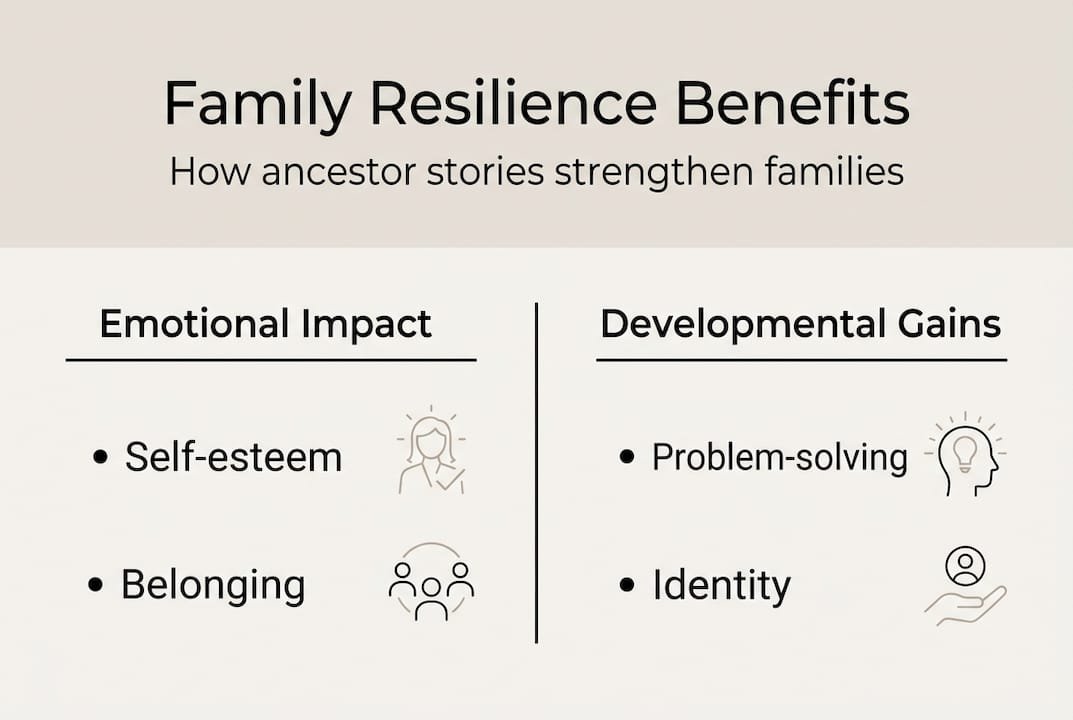
The legacy you create through preservation extends beyond information transfer. Family stories shape collective identity and provide a sense of continuity that buffers against life's uncertainties. Research consistently shows that family storytelling functions as a developmental process linking individual well-being with broader family narratives, creating psychological resources that support resilience across generations.
Different storytelling approaches offer distinct advantages:
Pro Tip: Schedule quarterly family story sessions where different members take turns sharing memories about specific themes like holidays, career milestones, or family traditions. Rotate the facilitator role to give everyone ownership of the preservation process.
Consider these practical benefits of active story preservation:
Children develop stronger emotional regulation skills by hearing how ancestors managed challenges and setbacks
Extended family members maintain closer connections through shared narrative projects and regular storytelling gatherings
Family identity becomes more cohesive as members recognize common values and patterns across generations
Younger generations gain perspective on current challenges by understanding family history and resilience patterns
Elderly family members experience renewed purpose and engagement through sharing their knowledge and experiences
The story sharing features of modern platforms make it easier than ever to distribute family narratives widely while maintaining privacy controls. You can create private family libraries accessible only to designated members, ensuring stories remain within the family while being available to all relatives regardless of geographic distance.
Start small but think big. Your first preservation project might focus on a single grandparent or specific family event. As you build skills and momentum, expand to cover broader time periods and include more family branches. The goal isn't perfection but progress, creating an ever-growing archive that serves your family's needs and honors your ancestors' legacies.
Preserve your family's stories with the Tell Me Your Story app
You've learned why ancestor stories matter and how to preserve them effectively. Now you need the right tools to put this knowledge into action. The Tell Me Your Story app simplifies every aspect of family story preservation, from initial recording through long-term archiving and sharing.
The platform offers guided prompts that help you and your family members share memories naturally without feeling overwhelmed by blank pages or recording devices. Voice and photo capture work seamlessly together, creating rich multimedia narratives that bring stories to life. Your family library remains completely private, accessible only to members you designate.
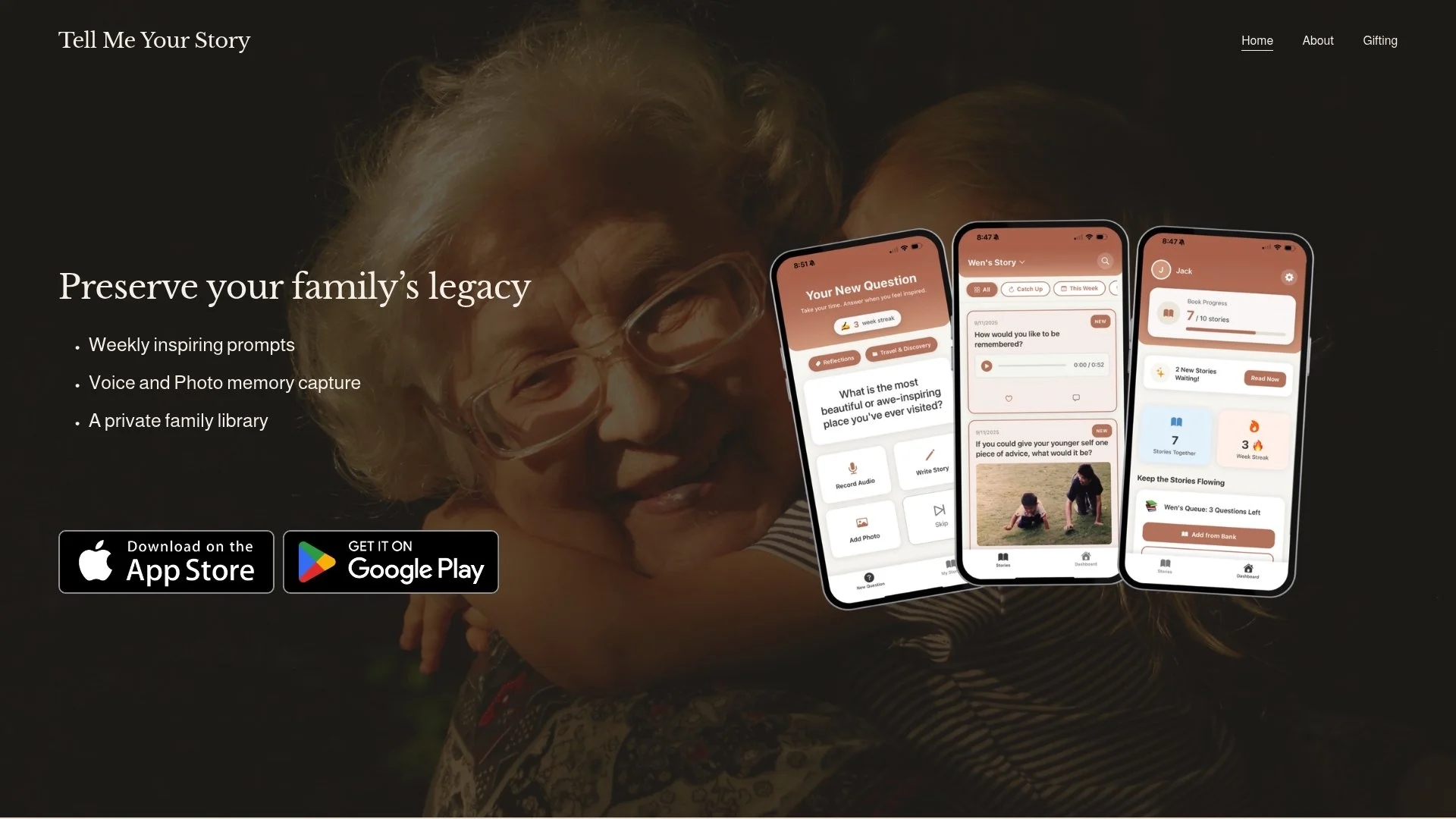
Gifting options make the app perfect for parents, grandparents, and relatives who want to preserve their stories but need a gentle push to get started. Explore family memory gifting options that provide everything needed to begin capturing invaluable narratives today. You can preview how story sharing works before committing, seeing firsthand how the platform transforms individual memories into lasting family legacy.
Frequently asked questions
What are ancestor stories and why do they matter?
Ancestor stories are narratives about your family's heritage, including personal histories, challenges overcome, traditions maintained, and values passed down through generations. They matter because they provide children with psychological resources that boost self-esteem, reduce anxiety, and build resilience. These stories create a sense of belonging and identity that supports emotional health throughout life.
How can I start preserving my family's ancestor stories?
Start by scheduling informal conversations with older relatives using prepared interview questions that guide discussion without feeling rigid. Record these conversations on your smartphone or computer, focusing on authenticity over production quality. Engage family members by explaining the emotional and developmental benefits of preservation, and use guided tools that make the process feel natural rather than intimidating.
What should I consider when sharing sensitive family stories?
Always obtain explicit permission from storytellers before recording or sharing narratives that touch on trauma, private matters, or culturally sensitive topics. Respect the cultural context of stories and avoid forcing disclosure when family members express reluctance. Create separate archives for public versus private stories, and establish clear guidelines about access that honor storytellers' wishes while preserving valuable heritage for future generations.
How do ancestor stories benefit children and families?
Children who regularly hear family stories develop stronger identity and self-confidence because they understand their place within a larger narrative of resilience and capability. Families experience enhanced emotional bonds as storytelling creates shared experiences and common reference points. The practice of preserving and sharing stories also provides structure for intergenerational connection, giving families a meaningful activity that strengthens relationships while creating lasting legacy.
Recommended
Tell Me Your Story App | Record Family Histories & Parents' Stories
Tell Me Your Story: The Ultimate Gift for Parents | Preserve Family Memories - Tell Me Your Story
Why I Created the Tell Me Your Story App (Founder's Story) - Tell Me Your Story
50 Best Questions to Ask Your Parents (Oral History Guide) - Tell Me Your Story
